

Food Packaging Applications and Selection Guide
Food Packaging Containers and Trays: Applications and Selection Guide
A practical guide to choosing PET jars, bakery packaging, PP food trays and custom blister packaging for food brands, bakeries, supermarkets and packaging distributors.
The right food packaging does more than hold a product. It protects the contents, supports shelf presentation, fits the production line and gives buyers confidence in long-term supply. A clear PET jar may be ideal for nuts or supplements, while a white PP tray may be better suited to a structured food application. For this reason, packaging selection should begin with the finished product and its route to market, not with a material name alone.
Start with the Finished Food Product
A useful food packaging selection matrix should begin by asking what the finished product must achieve. The same PET jar or thermoformed tray can perform differently when the filling method, product weight, temperature, decoration and distribution route change.
PET Jars for Honey, Nuts and Dried Food
Honey packaging, nut containers and dried food packaging usually place strong emphasis on product visibility, container shape, opening convenience, label area and shelf appearance. A clear PET jar can help customers see the color and texture of the contents, while round PET jars can create a familiar retail presentation. Square PET jars may improve shelf-space utilization and provide a larger front surface for labeling.
For these applications, buyers should review the usable volume, neck finish, lid compatibility, wall appearance, stacking behavior and carton loading. The best PET plastic jar wholesale option is not simply the largest container. It is the model that fits the filling line, retail format and required case quantity.
Protein Powder Jars and Supplement Containers
Protein powder jars and dietary supplement containers often require a wide mouth for filling and dispensing, stable walls for handling and a clear, consistent appearance. The container should be evaluated together with the cap, label, powder density, filling equipment and intended distribution conditions.
For supplement container sourcing, ask the supplier to confirm the selected model’s material information and applicable food-contact documentation. Avoid treating a general product description as a complete compliance statement. The final declaration should match the exact model, component and intended use.
Bakery Packaging for Bakeries and Supermarkets
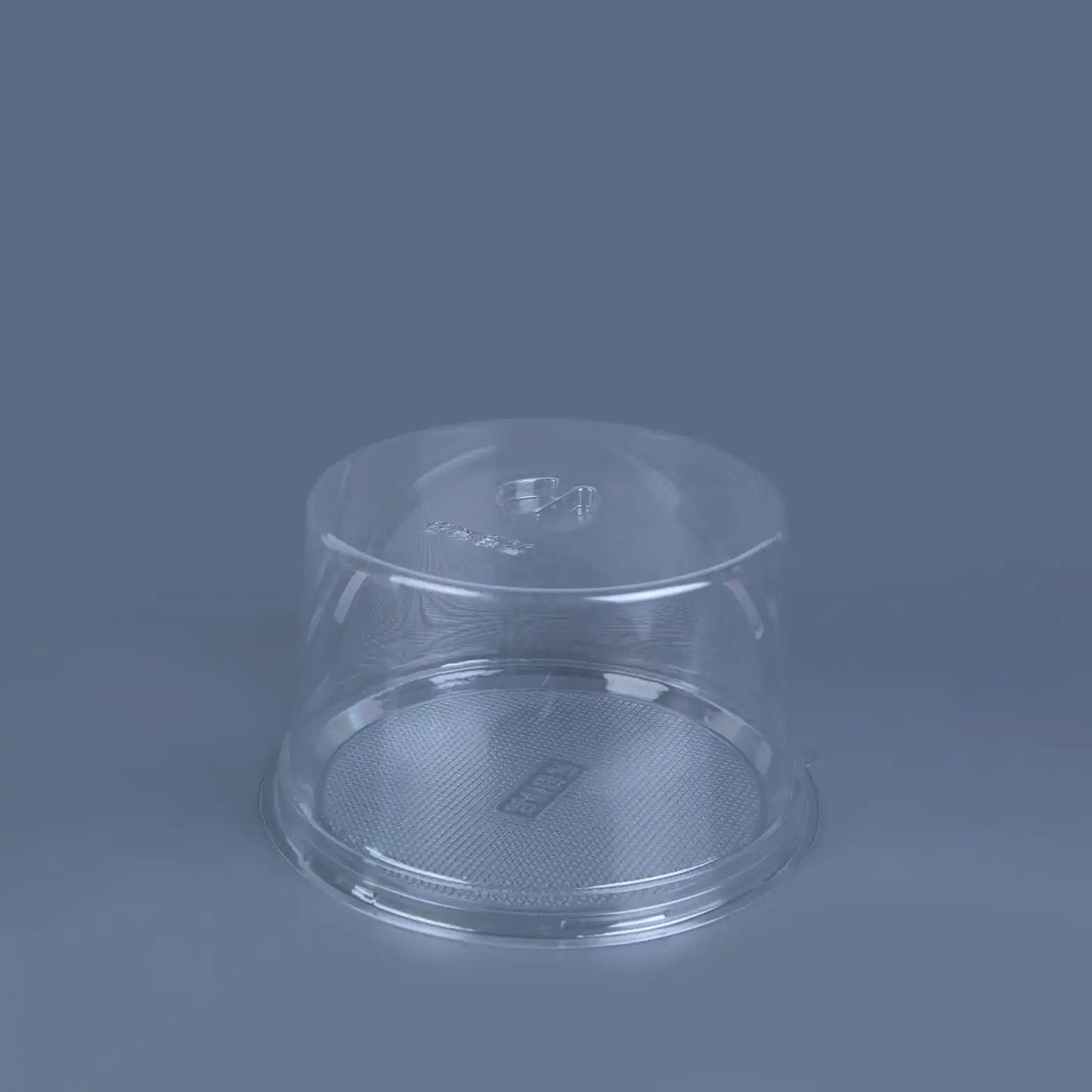
Bakery packaging is an application category that covers cake boxes, dessert containers, pastry trays and bakery display packaging. For a 4 inch cake box or mini cake box, a clear PET lid can support product visibility while a PP base can provide a stable platform. This PET lid PP base cake box structure is relevant to supermarket bakery packaging, takeaway dessert packaging, cafe pastry sales and individual cake packaging.
Buyers should confirm the inner diameter, cake height, decoration clearance, lid fit, base stability, label area and case packing before ordering. A bakery display box should be tested with the finished product, because an empty package cannot show whether cream, fruit or other decorations will contact the lid.
Fresh Produce and Frozen Food Trays
Fresh produce packaging trays and frozen food PP trays must be assessed at the complete-package level. Product weight, low-temperature handling, stacking, transport vibration, filling speed and storage conditions can all affect the required structure.
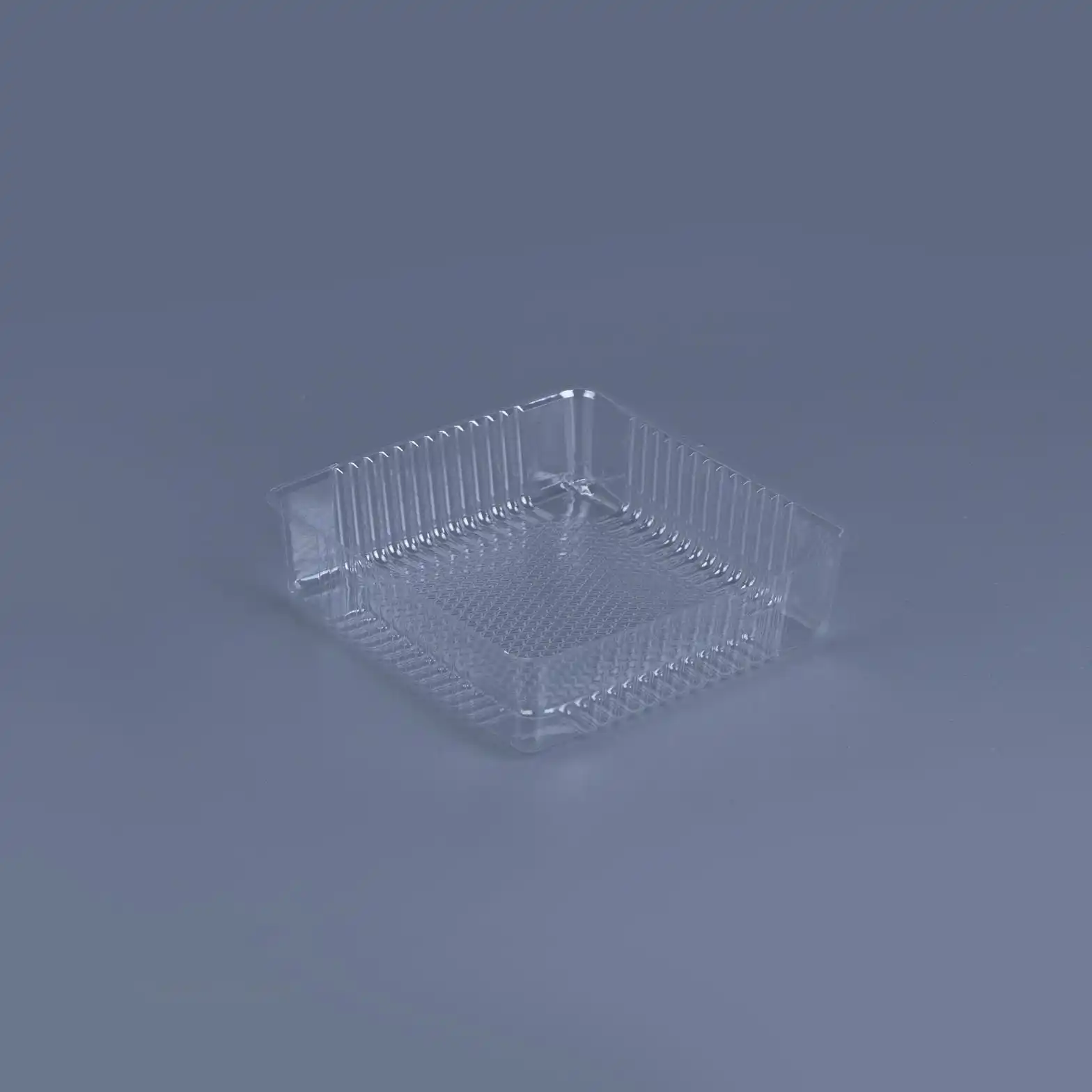
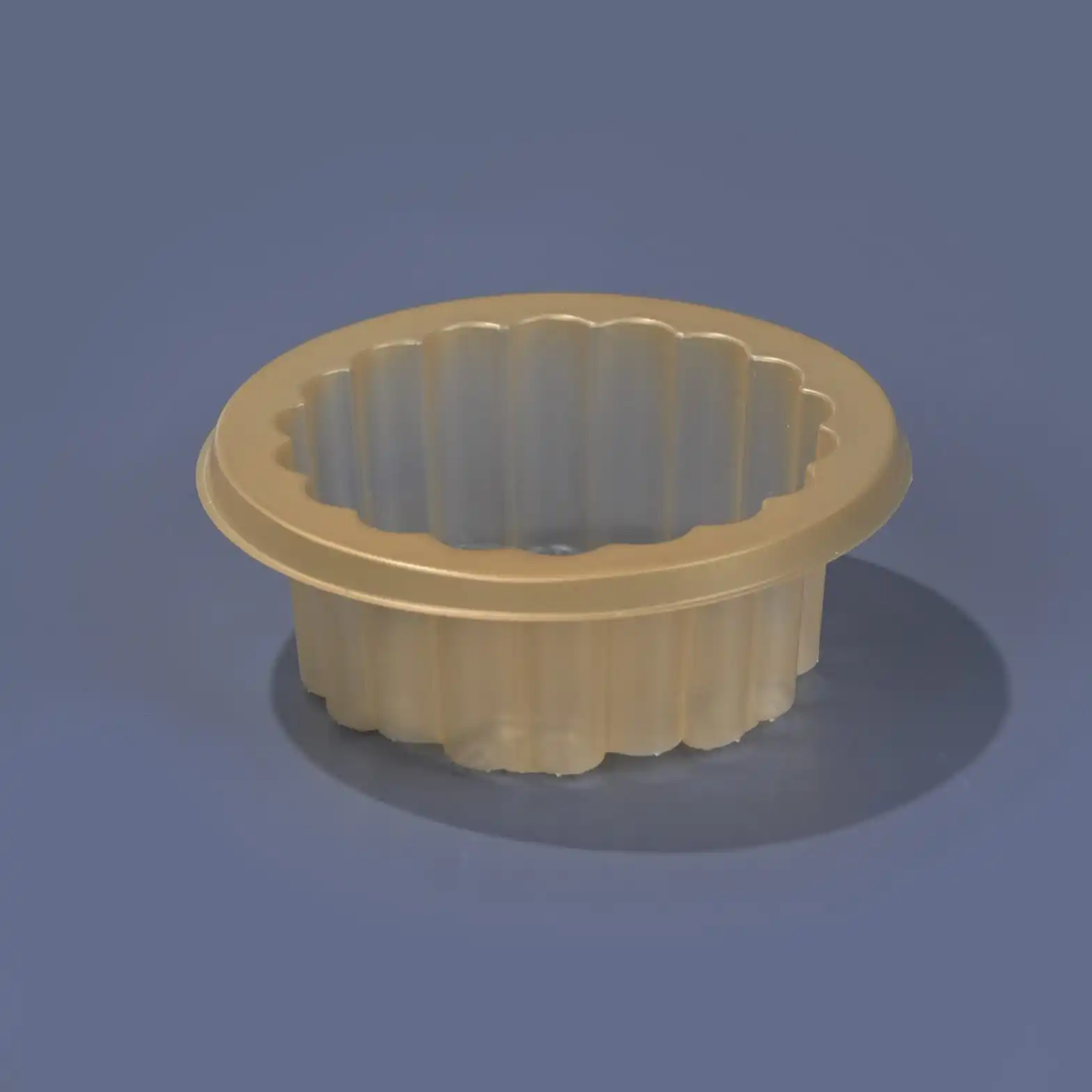
Transparent PET trays may be considered when product visibility is central to the retail presentation. White PP trays may be considered when the selected model and application require a different structure or appearance. The final material should always be confirmed from the exact model information. A product category such as bakery packaging or frozen food packaging does not itself define the material.
Which Packaging Properties Matter for Finished-Product Performance?
Different food packaging applications can use similar structures while assigning different importance to individual properties. A supplier should evaluate the package with the buyer’s product, process and distribution conditions in mind.
| Finished-product requirement | Packaging factors to review | Typical buying question |
|---|---|---|
| Clear retail presentation | Material clarity, surface appearance, lid geometry and scratch resistance during handling. | Will shoppers see the product clearly on a bakery or supermarket shelf? |
| Stable filling and transport | Wall structure, base support, lid fit, stacking and carton protection. | Will the package remain stable during filling, case packing and delivery? |
| Wide-mouth filling | Neck finish, opening diameter, cap compatibility and label position. | Can the protein powder, nuts or dried food be filled efficiently? |
| Frozen or chilled distribution | Exact material, wall thickness, geometry and performance under the intended test conditions. | Has the selected model been evaluated for the actual temperature and handling route? |
| Retail labeling | Front-panel area, surface shape, decoration method and label adhesion. | Can the brand display product information without covering the main visual selling point? |
| Repeatable wholesale supply | Tooling stability, inspection plan, batch traceability, carton packing and production schedule. | Can the supplier maintain the same specification across replenishment orders? |
How to Compare PET Jars, PET Trays and PP Trays
Define the application first
Separate honey packaging, protein powder packaging, bakery packaging, fresh produce packaging and frozen food packaging into clear requirements rather than using one general specification.
Confirm the exact material
Clear PET and white PP are common reference points for the relevant products, but the exact model documentation must confirm the component material and intended use.
Measure the finished product
Check product diameter, height, weight, filling clearance, decoration height and the space required for labels or lids.
Review the complete package
Evaluate the jar with its lid or the tray with its cover. Fit, opening force, retention, stacking and transport performance cannot be judged from one component alone.
Request model-specific documents
Ask for material information, technical drawings, available compliance documents, packing details and sample confirmation for the selected model.
Plan the commercial order
Confirm MOQ, carton quantity, decoration, tooling, destination and lead time before comparing supplier quotations.
What Wholesale Buyers Should Check Before Selecting a Food Packaging Supplier
- Exact product dimensions, capacity and gram weight
- Material information for each component
- Technical drawing or confirmed sample
- Food-contact and quality documents for the selected model
- Production environment and quality control process
- Batch traceability and handling of non-conforming products
- Carton packing, loading quantity and shipping plan
- Decoration options such as PET jar labeling or silk screen printing
- MOQ, tooling cost and standard production schedule
- Clear process for sampling, approval and mass production
Why Factory Quality Systems Matter in Food Packaging
For a small trial order, a jar or tray may look like a simple purchasing item. For a food brand, bakery chain, supermarket supplier or packaging distributor, it becomes part of a controlled supply chain. Consistent dimensions, material control, production hygiene, inspection records and batch traceability all affect the buyer’s ability to keep products on the shelf.
Zhejiang Times Plastic Industrial Co., Ltd. manufactures PET jars, PET containers, PP food trays and custom blister packaging through injection molding and thermoforming. The company operates under BRC Grade A, ISO 9001 and ISO 22000 management systems and supports food packaging projects with product development, sampling, quality control and factory-direct supply.
For PP thermoformed trays, the company also maintains PP sheet production capability to support material consistency and supply coordination. PET sheet sourcing and the final material declaration should be confirmed by the exact product model. This distinction matters when a buyer is comparing a transparent PET tray, a white PP tray or a custom blister tray for a specific application.
Customization, Decoration and Wholesale Supply
Custom PET jar OEM and custom blister tray projects normally begin with the product drawing, target capacity, material, wall structure, lid or cover requirement, decoration and forecast quantity. A supplier can then review tooling, sampling, production feasibility and packing.
For PET jars, silk screen printing on PET jars is commonly considered for logos, names and simple graphics. PET jar labeling is often more suitable for multi-color artwork, gradients or designs containing more information. The appropriate decoration method depends on the surface, artwork, quantity and required appearance.
For standard wholesale programs, the current reference is 50,000 pcs MOQ and a 7-15 days standard lead time, subject to model, quantity, decoration, tooling and production schedule confirmation. A clear quotation should identify the product model, component materials, packing, shipping terms and any additional development requirements.
Frequently Asked Questions
The right model depends on the product volume, filling method, neck finish, lid, label area and retail format. Round PET jars are common for clear shelf presentation, while square PET jars may support space-efficient packing and labeling.
Start with the application and required performance. A clear PET tray can support product visibility, while a white PP tray may suit a different structural or appearance requirement. Confirm the exact material and model documentation before ordering.
Selected bakery packaging models can be developed with a clear PET lid and PP base configuration. The final size, fit, material and availability should be confirmed against the product drawing or approved sample.
Yes. OEM and ODM discussions can cover dimensions, structural design, tooling, sampling, labels, silk screen printing, packing and production planning. Feasibility depends on the selected application and order requirements.
The current reference is 50,000 pcs MOQ and 7-15 days standard lead time. The final schedule depends on the model, quantity, decoration, tooling and production plan.
Review raw material control, production hygiene, process inspection, finished-product inspection, traceability, non-conformance handling, document control and the scope of the supplier’s quality certifications.
Need the Right Food Packaging for Your Product?
Send us your product type, target capacity, dimensions, material preference, decoration requirements, order quantity and destination market. Our team can help compare PET jars, bakery packaging, PP food trays and custom blister packaging options.
Contact Savannah: WhatsApp +86 158 0592 4683 | Email sales4@timesindustrial.com | www.timesplastic.com