

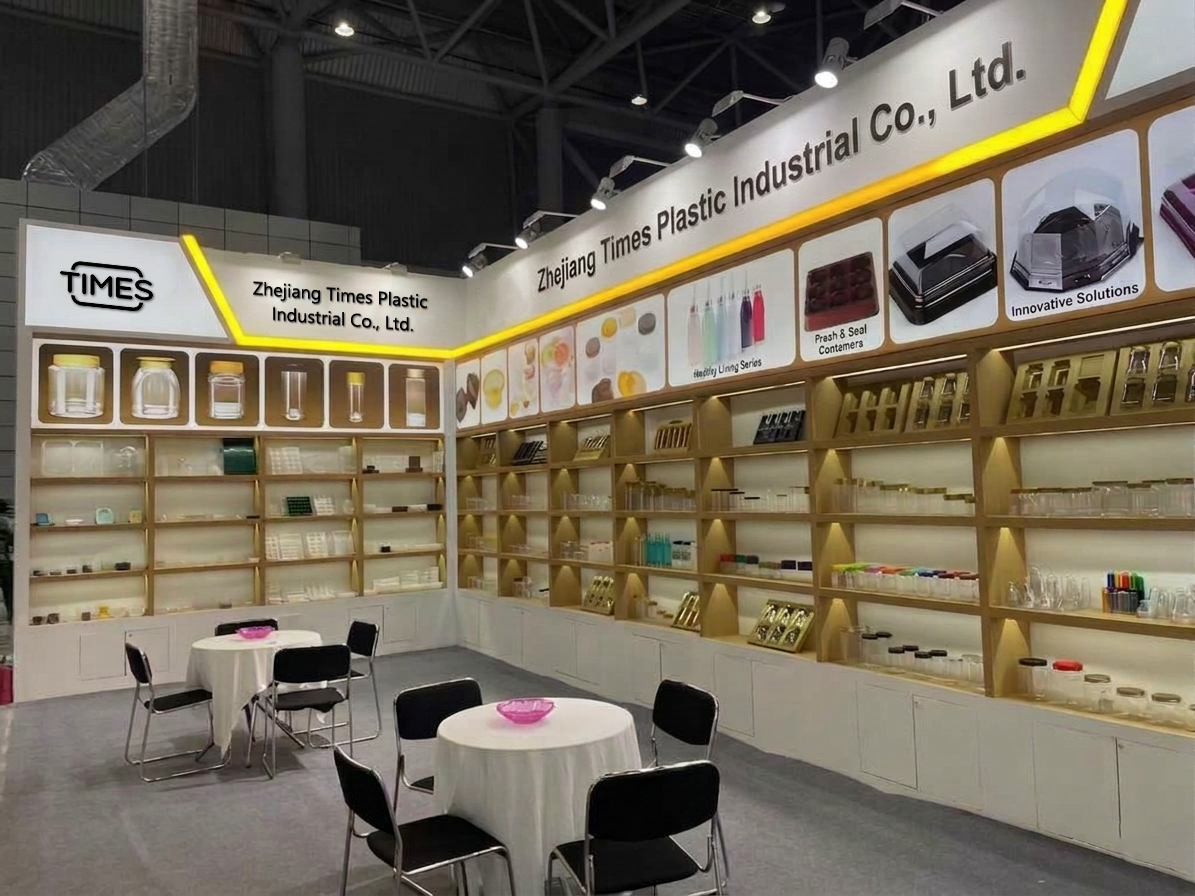
Choosing a food packaging manufacturer is a long-term supply-chain decision. Food brands, bakeries, supermarkets, distributors and contract packers need more than an attractive sample: they need consistent dimensions, controlled materials, repeatable production, clear documentation and dependable delivery. A strong manufacturing foundation helps a supplier support PET jars, PP food trays, bakery packaging and custom thermoformed packaging across repeated orders.
Zhejiang Times Plastic Industrial Co., Ltd. has built its business around food packaging manufacturing, including PET plastic jars, food containers, thermoformed trays and custom blister packaging. This article explains the manufacturing and quality factors buyers should review before selecting a food packaging supplier in China.
Why Manufacturing Capacity Matters in Food Packaging
For a small sample order, production scale may not seem important. For a wholesale program, however, capacity affects replenishment, specification consistency, packaging schedules and the supplier’s ability to respond when demand changes. A capable food packaging factory should be able to connect product development, tooling, production planning, inspection and export packing.
Manufacturing scale is not a substitute for quality control. It should work together with documented procedures, trained operators, material identification, process inspection and finished-product checks. Buyers should assess both the physical facility and the management system behind it.
Facility Investment and B2B Supply Stability
The company reports a total investment of RMB 1 billion, a facility area of more than 25,000 square meters and approximately 15,000 square meters of manufacturing space. Its design and operations center is located in Hangzhou, while manufacturing activities are based in Lin’an. For B2B buyers, this dual-location operating structure is relevant because product development, communication and production coordination must work together during sampling and mass production.
When reviewing a potential PET jar manufacturer or plastic food tray manufacturer, buyers should ask how the supplier manages:
- Product drawings and specification approval
- Tooling and sample confirmation
- Raw material identification and batch control
- Production scheduling for repeat orders
- Finished-product inspection and non-conformance handling
- Export packing, carton quantity and shipment planning
Food Packaging Quality Systems and Certifications
Food packaging quality depends on the relationship between materials, production conditions and management procedures. The company identifies the QS Food Production License, BRC Global Standard certification and ISO 9001 Quality Management System certification among its quality credentials. Buyers should always request the current certificate copies, certificate scope and validity dates for their specific project.
BRC-related language should be used accurately. A company-level certification or audited management system does not automatically mean that every product has the same performance claim. The selected PET jar, PP tray or blister packaging model should still be supported by the applicable material information, technical specification and food-contact documentation.
Cleanroom Manufacturing for Food Packaging
A controlled production environment is an important consideration when sourcing food packaging containers and trays. The company reports a Class 100,000 cleanroom facility and the use of selected food-grade raw materials. Buyers evaluating a food packaging supplier should look beyond the cleanroom statement and review the complete control process, including cleaning procedures, personnel control, material handling, inspection records and traceability.
For food brands, the practical question is simple: can the supplier maintain the same product specification and hygiene control from the approved sample through every replenishment order? This is especially important for clear PET jars, bakery display packaging, PP frozen food trays and custom thermoformed inserts.
PET Jars, PP Food Trays and Custom Thermoformed Packaging
Different applications require different packaging structures. Clear PET jars may be used for dry food, nuts, honey, spices, supplements and other retail products when product visibility and the exact container design are appropriate. PP food trays may be used for selected bakery, fresh food, frozen food and food-processing applications. Custom blister trays can be developed around the product shape, cavity layout and outer packaging.
Material selection must be confirmed by the exact model. Transparent appearance alone does not prove that a product is PET, and a food application alone does not prove that a tray is PP. Buyers should request the model number, dimensions, material declaration, approved sample and relevant documents before production.
Explore related product categories:
- PET plastic jars and bottles for retail food, supplement and dry-food packaging
- Thermoformed food trays and blister packaging for bakery, confectionery and food-processing applications
- PP freezer trays for selected frozen-food packaging projects
How Buyers Can Audit a Food Packaging Factory
A factory audit should connect company capability with the exact product being purchased. A practical checklist includes:
- Raw material supplier approval and material identification
- Production-line cleanliness and process controls
- Tooling maintenance and dimensional inspection
- Product weight, dimensions and appearance checks
- Batch traceability and sample retention
- Handling of customer complaints and non-conforming products
- Certificate scope and document-control procedures
- Carton packing, loading information and export coordination
MOQ, Lead Time and Custom Packaging Development
For standard wholesale programs, the current commercial reference is commonly discussed around 50,000 pieces MOQ and a 7–15 day standard lead time. The final quotation depends on the product model, quantity, tooling, decoration, packing method and production schedule. These figures should be confirmed in writing for each order.
A custom PET jar OEM or custom blister tray project normally starts with product dimensions, target capacity, material preference, artwork, forecast quantity and destination market. The supplier can then review tooling, sampling, production feasibility and packing requirements.
Frequently Asked Questions
What makes a reliable food packaging manufacturer?
A reliable manufacturer combines suitable equipment, material control, inspection procedures, traceability, clear documentation and repeatable delivery. A large facility alone is not enough.
Can one supplier provide PET jars and PP food trays?
A supplier may provide both product categories, but each model must be reviewed separately. Confirm material, dimensions, application and applicable documents for every product.
What documents should I request before placing an order?
Request the technical drawing, material information, certificate documents applicable to the project, packing details, approved sample record, MOQ and confirmed lead time.
Do you support custom food packaging?
Custom discussions can cover PET jars, thermoformed food trays, blister inserts, dimensions, cavity layouts, decoration, packing and production planning. Feasibility depends on the specific product and order requirements.
Request a Food Packaging Manufacturing Review
If you are sourcing PET plastic jars, PP food trays, bakery packaging or custom thermoformed packaging, send the product dimensions, application, target quantity, destination market and required documents. TIMES Plastic can review the project and provide model-specific specifications, sample arrangements and a quotation.
Product and compliance note: Material, dimensions, food-contact statements, certification scope and performance claims must be confirmed against the exact model and applicable documents. Company information does not replace product-specific verification.