

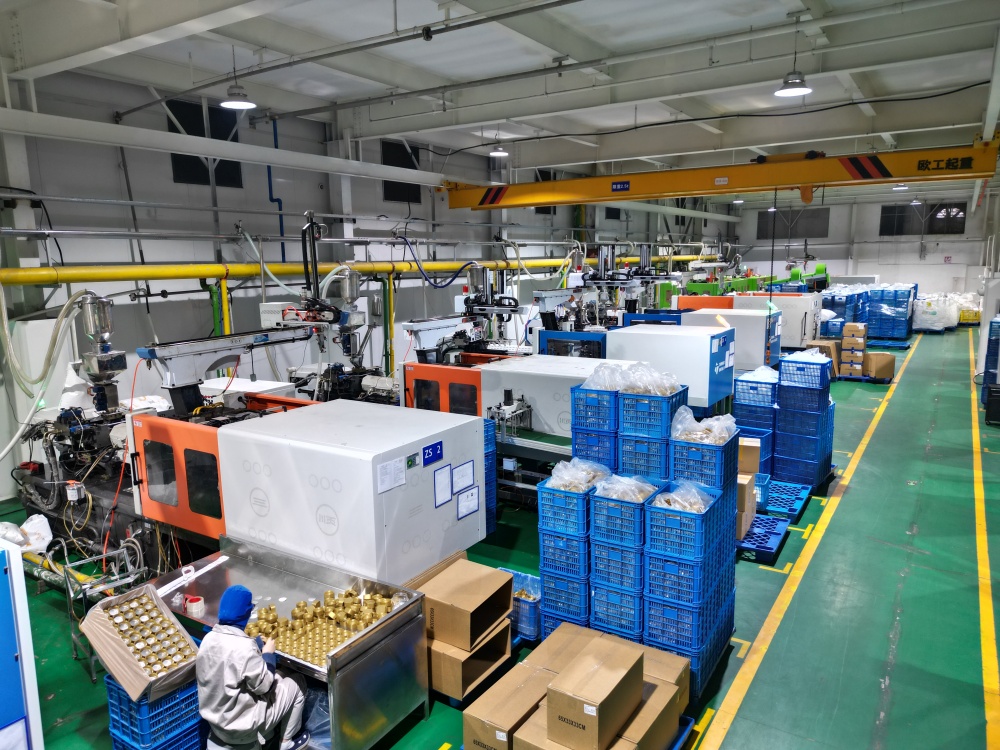
Food packaging quality is created throughout the manufacturing process, not inspected only at the end. Raw material control, forming accuracy, printing, cleanliness, dimensional inspection and packing all influence whether a PET jar or thermoformed food tray performs consistently in a buyer’s supply chain.
Zhejiang Times Plastic Industrial Co., Ltd. applies an integrated manufacturing approach across injection molding, blow molding, thermoforming, PP sheet production and printing. This article explains how integrated production can support food packaging quality, custom development and wholesale delivery for food brands, bakeries, supermarkets and packaging distributors.
What Is Integrated Food Packaging Manufacturing?
Integrated manufacturing means that multiple stages of a packaging project are coordinated within one production system rather than being handled through disconnected suppliers. For a custom food packaging project, this can connect material preparation, forming, decoration, inspection and packing.
The benefit is not simply convenience. When responsibility is divided among too many suppliers, buyers may face inconsistent dimensions, unclear material records, slower problem resolution and more complicated production scheduling. An integrated food packaging manufacturer can create a clearer quality-control chain, provided that each process is documented and verified.
Production Processes Used for Food Packaging
Injection Molding and Blow Molding
Injection molding and blow molding are used for selected plastic containers, bottles and packaging components. These processes require control of material feeding, mold condition, cycle parameters, appearance and dimensional consistency. For buyers sourcing PET plastic jars or bottles, the neck finish, closure compatibility, wall appearance and weight should be confirmed by the exact model.
Thermoforming for Food Trays and Blister Packaging
Thermoforming is used for selected bakery trays, PP food trays, PET trays, frozen food trays and custom blister packaging. Forming temperature, mold condition, sheet thickness, cavity geometry and trimming influence the final tray. Buyers should evaluate the finished sample, including cavity fit, rim condition, stacking, cover compatibility and carton packing.
PP Sheet Production
The company maintains PP sheet production capability for relevant PP thermoformed tray projects. This can support coordination between sheet specifications and tray forming. PET sheet sourcing should be confirmed separately for products that require PET; the company should not be described as operating a closed-loop in-house PET sheet extrusion system unless the specific evidence supports that statement.
Printing and Decoration
Printing and decoration affect both brand presentation and production consistency. Depending on the product surface and artwork, buyers may evaluate silk screen printing, labels or other decoration methods. Artwork, color references, surface preparation, inspection standards and approval samples should be confirmed before mass production.
How Integrated Production Supports Quality Control
An integrated manufacturing structure can support quality control in several practical ways:
- Clearer responsibility for material and process records
- Faster communication between tooling, forming and inspection teams
- More consistent coordination for custom PET jars and food trays
- Reduced handoff risk between unrelated production suppliers
- More efficient handling of sample changes and production feedback
- Improved planning for carton packing and export delivery
Integration does not remove the need for verification. Buyers should still request technical drawings, material information, sample approval, inspection criteria and documents applicable to the selected model.
Manufacturing Capacity for Wholesale Food Packaging
The company reports more than 30 injection molding and blow molding machines, more than 10 thermoforming lines, food-grade sheet production capacity and printing systems. It also reports annual capacity of approximately 10,000 tons for plastic containers, 180 million units for bottles and jars, and 9,000 tons for food-grade sheets.
Capacity figures should be understood as company-level references, not a guarantee for every model or order. A buyer should confirm available production time, tooling status, material supply, order quantity, decoration requirements, packing method and delivery schedule for the specific project.
Applications: PET Jars, Bakery Packaging and PP Food Trays
An integrated production system can support different product categories and purchasing requirements:
- PET food jars: clear PET jars, square PET jars, cylindrical PET jars and wide-mouth containers for selected food, supplement, honey, nut and dry-goods applications.
- Bakery packaging: cake trays, pastry trays, dessert containers, sandwich packaging and confectionery inserts.
- PP food trays: selected frozen food trays, meat trays, fresh-food trays and food-processing trays.
- Custom blister packaging: shaped cavities, multi-compartment inserts, gift-box trays and product-specific thermoformed packaging.
Product suitability must be based on the exact model. A tray intended for bakery packaging should not automatically be described as freezer-safe, microwave-safe, leak-proof or anti-fog without model-specific tests or documentation.
Useful product categories for further review include PET jars and plastic bottles, bakery trays and freezer trays.
Integrated Production and Custom Packaging Development
For a custom food packaging manufacturer, early information improves the feasibility review. Buyers should provide product drawings or samples, target dimensions, material preference, cavity layout, lid or cover requirements, decoration, forecast quantity and destination market.
The development process may include design review, tooling discussion, prototype or sample production, dimensional confirmation, packing evaluation and mass-production approval. Keeping these steps connected can shorten feedback loops, but the final schedule still depends on the project scope and customer approvals.
Quality Documents Buyers Should Review
Before ordering, ask for documents relevant to the selected product and market, such as:
- Material declaration and component information
- Technical drawing and specification sheet
- Applicable food-contact documentation
- Quality-system certificates and certificate scope
- Sample approval and inspection criteria
- Carton packing and shipment information
- MOQ, tooling cost and confirmed lead time
MOQ, Lead Time and Supply Coordination
For standard wholesale projects, the current reference is commonly discussed around 50,000 pieces MOQ and a 7–15 day standard lead time. The final commercial terms depend on the model, quantity, tooling, printing, packing and production schedule. Buyers should confirm these details in the quotation rather than relying on a general website statement.
Frequently Asked Questions
Does integrated production guarantee zero quality problems?
No. Integration can improve process coordination and traceability, but quality still depends on product specifications, inspection, documentation, training and customer approval.
Can integrated manufacturing support custom thermoformed trays?
It can support discussions involving tray dimensions, cavity layout, tooling, samples, material and packing. The feasibility of each custom tray depends on the product and order requirements.
Does PP sheet production mean the supplier produces all PET sheets in-house?
No. PP sheet production and PET sheet sourcing should be described separately. The material source for each selected product should be confirmed from the exact model information.
What information is needed for a factory quotation?
Send the product dimensions, material preference, packaging structure, decoration, order quantity, destination market and any required compliance documents. This allows a more accurate review of tooling, samples and delivery.
Talk to an Integrated Food Packaging Manufacturer
If your company is sourcing PET jars, PP thermoformed trays, bakery packaging, frozen food trays or custom blister packaging, contact TIMES Plastic with your product requirements. The team can review the application, confirm model-specific information and discuss samples, MOQ, lead time and wholesale supply.
Product and compliance note: Production capability, material, dimensions, certification scope and performance claims must be confirmed for the exact product model and project. Integrated manufacturing does not replace product-specific testing or document review.